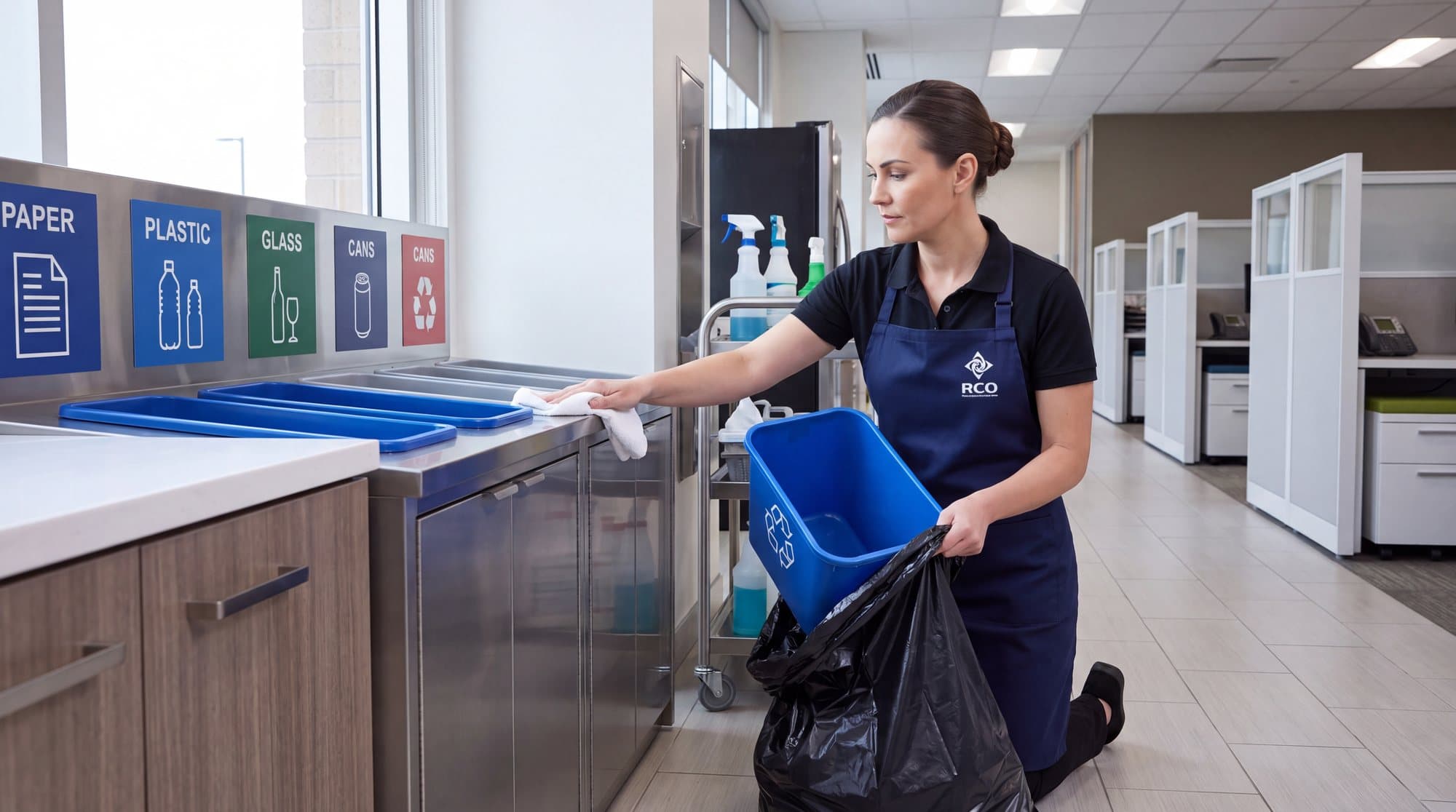

In short: Green cleaning solutions for commercial facilities can be summed up in three categories: products with independently reviewed ingredients, like EPA's Safer Choice labeled or Green Seal certified products; cleaning tools like microfiber that capture dirt and grime using less water and chemicals; and dose dispensers that provide proper dilution every time concentrates are used. At RCO Cleaning we provide green cleaning services for commercial facilities in Metro Detroit: (248) 849-0000.
What green cleaning means in a commercial building
Older visions of green cleaning involved a cupboard of vinegar and baking soda. In a commercial building that recipe rarely holds up: floors, restrooms and break rooms of a busy office require products that are proven effective, used in proper amounts. EPA's Safer Choice program builds performance into the label itself. Products that carry the Safer Choice label must perform comparably to conventional products.
Green cleaning doesn't mean skipping disinfection when it's necessary. It means disinfecting what needs to be disinfected (restroom fixtures, high-touch surfaces), using products according to their labels exactly, and cleaning everything else using safer products and smarter tools.
It's also about the air employees breathe while at work. The EPA's guide for occupants of office buildings states that solvents, adhesives, cleaning products, and pesticides can emit pollutants and odors and requests measures to reduce exposure to contaminants from cleaning products. Using fewer products, thoroughly vetted, mixed at appropriate strengths, is the most straightforward way to enact those measures.
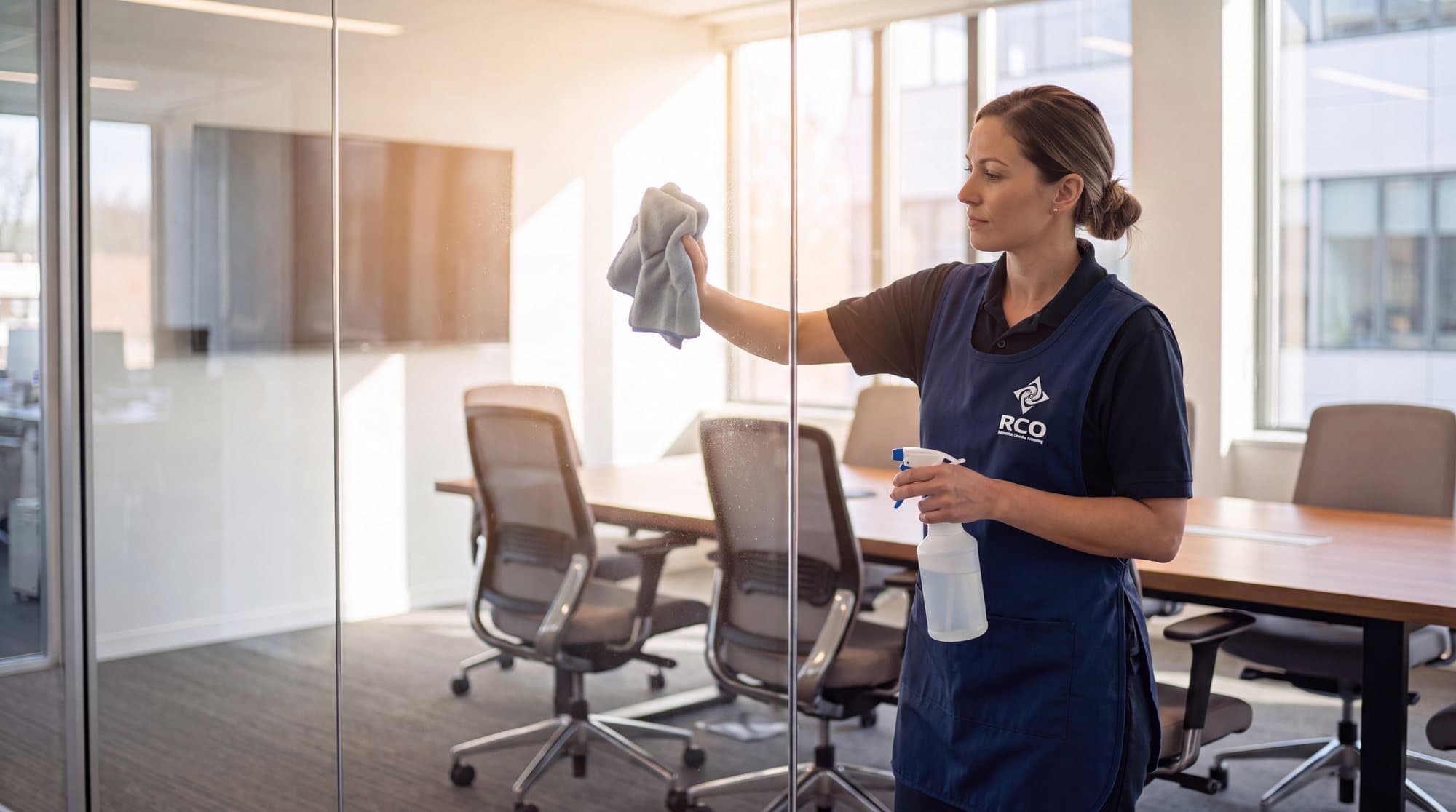
Which green cleaning labels should you look for?
No one can pronounce something green just by saying it is. Independent labels are the cheat code, and they are labels on products. So look for them on the bottles your cleaner arrives with.
| Label | Run by | What it tells you |
|---|---|---|
| Safer Choice | EPA | EPA has assessed every chemical ingredient, regardless of its concentration, for safety to human health and the environment. It works just as well as traditional counterparts, complies with pH restrictions (making it less likely to irritate skin and eyes), and limits VOCs. |
| Safer Choice Fragrance-Free | EPA | The same review, minus the fragrance. Worth requesting where scents bother people. |
| Design for the Environment (DfE) | EPA | For disinfectants and other antimicrobial products: FIFRA registration with additional EPA review for human health and environmental safety, including review of every ingredient. |
| Green Seal GS-37 | Green Seal | Certification for industrial and institutional cleaners (all-purpose, restroom, glass and carpet cleaners), with restrictions on toxicity, VOC content and packaging as well as performance testing. |
Safer Choice offers an optional logo for products intended specifically for business use, office buildings, stadiums and schools. Look for that one if you're comparing commercial building products.
The simplest way to know where you stand is to ask your janitorial company to provide you a list of every product it cleans your facility with (our guide to commercial cleaning supplies covers the language in your contract). Compare the labels to the list. You'll find that several products are responsible for the majority of the work in most facilities and those are the products you'll want to target first.
Microfiber mops and cloths
Microfiber is that eco-friendly tool almost no one notices. The EPA says microfiber is tightly woven polyester and polyamide (nylon) fibers approximately 1/16 the diameter of a human hair which can absorb six times their weight in water. Small fibers penetrate microscopic surface pores of most floor types and lift dust that a cotton mop merely moves around.
In a 2002 case study, EPA tracked the experience of the University of California Davis Medical Center as it transitioned from cotton loop mops to microfiber technology. Under their previous loop mop system, cleaning solution was changed after every two or three rooms cleaned. With microfiber technology, crews changed the mop head after cleaning each room, and kept the bucket clean. The hospital reduced water use associated with mopping by 95 percent and purchased 46 percent less cleaning chemical the following year.
Color-coded cloths
Separate colors for bathrooms and for desks and break areas, so that nothing ends up where it shouldn't.
Less water
Flat microfiber mops require much less solution than a loop mop, allowing floors to dry quicker behind them.
Reused, not thrown away
The mop heads were warrantied for 500 washings in EPA's case study.
Know the limits
The same hospital used machines, not microfiber, on oily kitchen floors and laundered their microfiber at regulated temperatures because high heat ruins it.
Dilution control: the simplest green upgrade
Lots of commercial cleaners are sold as concentrates, which is better for the environment already: less water gets transported around and less packaging ends up in the landfill. However a concentrate is only effective if you dilute it properly. Too weak and your surface will still be dirty. Too strong and you're wasting product, leaving residue behind and exposing people to more chemicals than necessary.
Green Seal's standard for industrial and institutional cleaners, GS-37, integrates dilution into the certification criteria. Concentrates can be certified provided that they are designed to be diluted by at least 1:32 for general-purpose cleaners and 1:16 for glass, restroom and carpet cleaners. Certified concentrates can't be sold in spray bottles or other ready-to-use packaging. The label must communicate recommended dilution and instruct users to dilute with cold tap water. Product makers, distributors, or a third party must provide dilution and use training. The standard defines criteria for closed dilution-control systems, where the concentrate is packaged in such a way that users can't practically access it undiluted.
One dispenser, one place
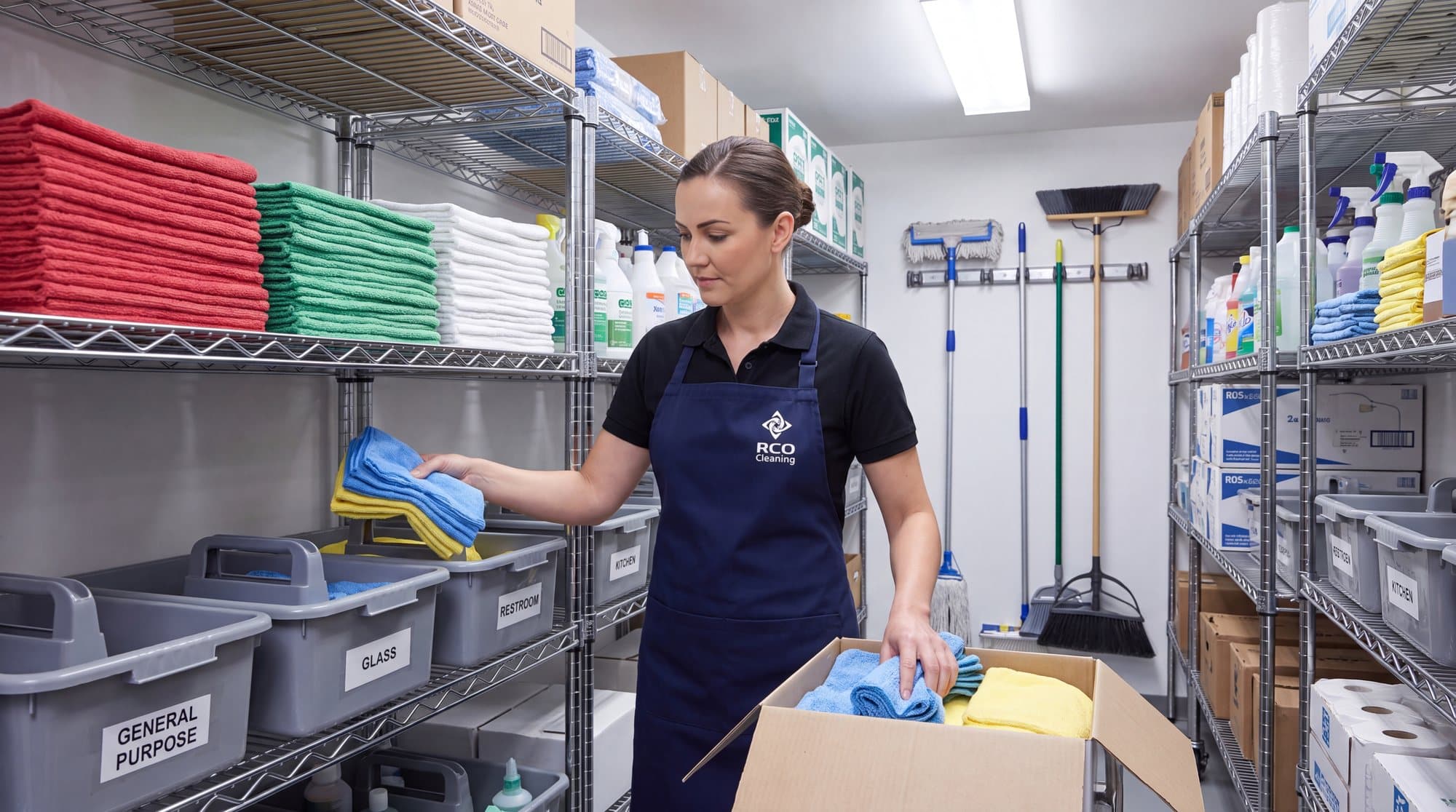
A dispenser mounted in the janitor's closet fills bottles and buckets at a consistent ratio every time.
Every bottle labeled
Spray bottle labels identify contents so there's no guessing and no mixing.
Cold water, as labeled
GS-37 instructs labels to suggest diluting with cold tap water.
Train, then check
Crews trained in ratios, managers verifying the dispenser is used, not bypassed.
You don't have to change all of them at once. Begin with the ones used most often; generally the general-purpose cleaner, the glass cleaner and the restroom cleaner. These are conveniently categories GS-37 addresses. Follow through with carpet care, floor finishes and disinfectants as they become depleted.
How green is your cleaning?
Green cleaning questions
Do green products clean as well?
Certified ones should. Safer Choice ensures products are as effective as traditional products, and GS-37 determines the performance tests for each type of cleaner.
Does green cleaning cost more?
It doesn't have to. In EPA's microfiber case study, the hospital purchased 46 percent less chemical after making the switch, and proper dilution reduces waste by itself.
Can green cleaning include disinfection?
Yes. EPA's Design for the Environment symbol identifies disinfectants that have met additional criteria for human health and environmental impacts. You can use these products anytime you would normally use a disinfectant, following label instructions.
Is green cleaning only for offices?
No. Businesses including schools, doctor's offices, warehouses and stores all use the same products and tools. Safer Choice even has a label specifically for business products used in office buildings, sports venues and schools.
Who offers green cleaning for office buildings in Metro Detroit?
Ask your commercial cleaning service for a program: a list of products, labels you can check and dilution control. RCO Cleaning has a green cleaning program serving Oakland, Wayne and Macomb counties and customizes it for you at your free walkthrough, including fragrance-free products if you want them: (248) 849-0000.
How RCO Cleaning builds a green program for your building
RCO provides environmentally friendly cleaning services for commercial buildings throughout Metro Detroit. Our modern equipment allows our crews to use fewer chemicals and our water-fed window system cleans your glass with purified water. During your complimentary walkthrough, let us know what is important to you and your building. From fragrance-free products to labeled products or reduced waste, we will customize your building's cleaning program to fit your needs.
Sources
Next guide
How to choose a commercial cleaning company: eight things to ask before signing your cleaning contract. Most problematic cleaning contracts were established incorrectly. Learn what good answers should sound like, and how RCO Cleaning answers all eight.