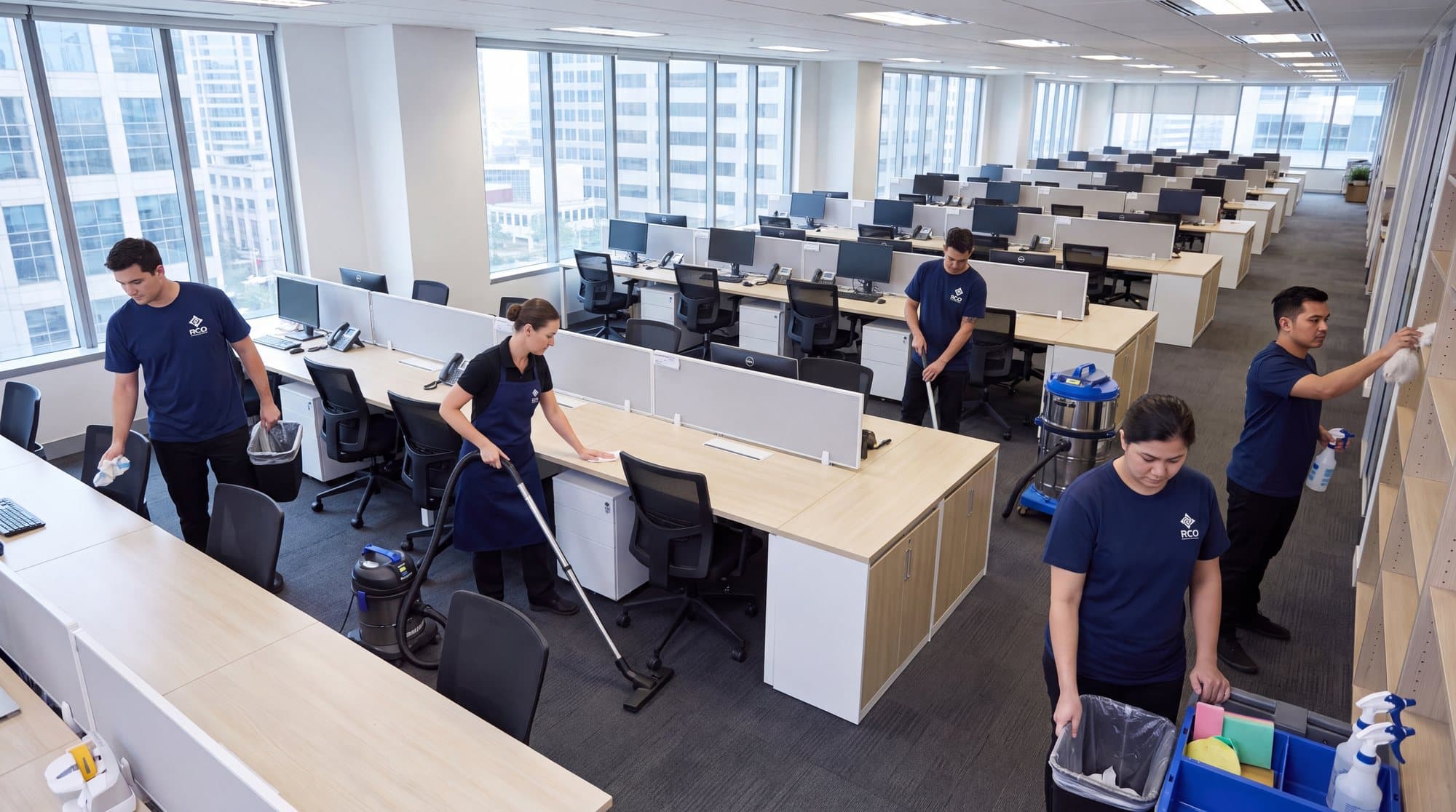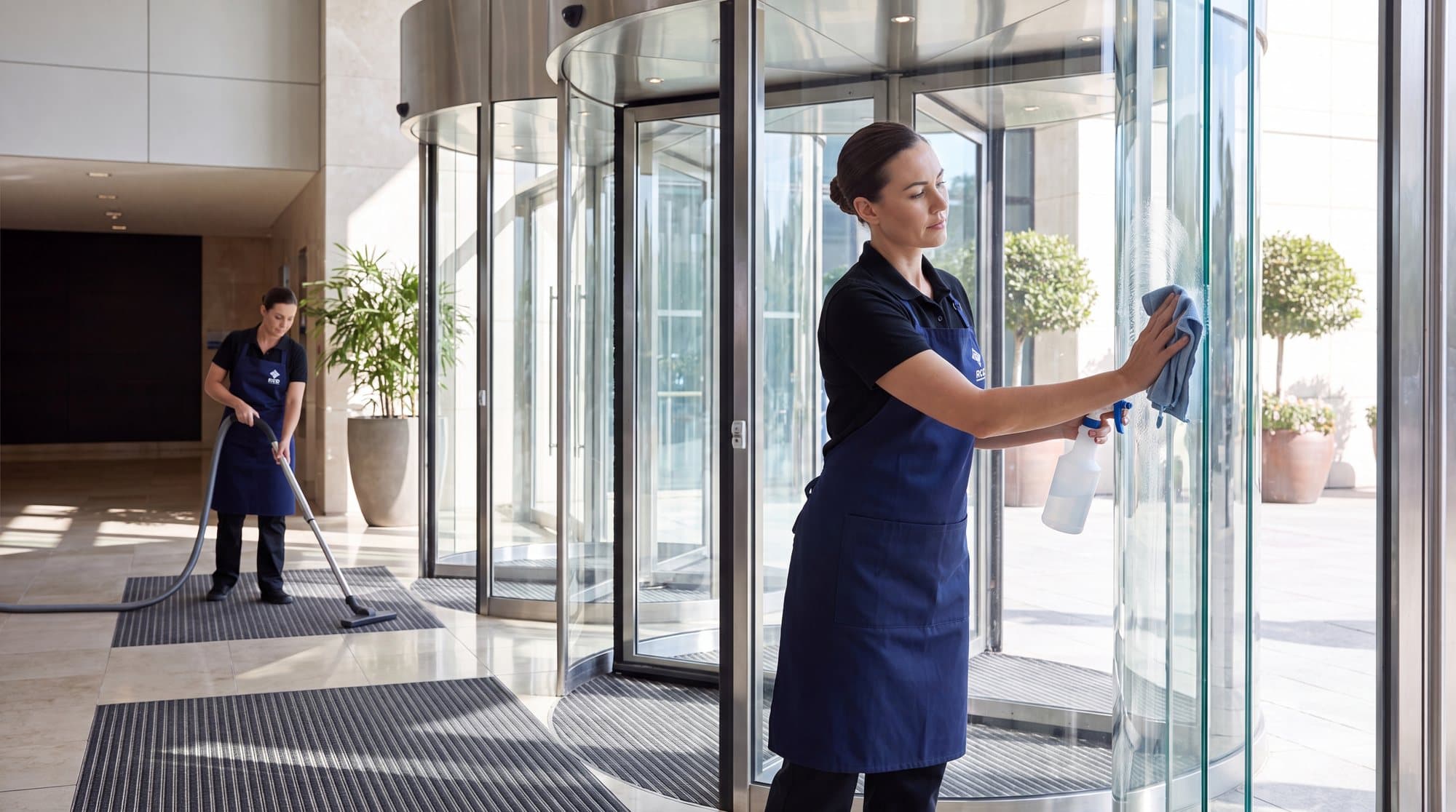
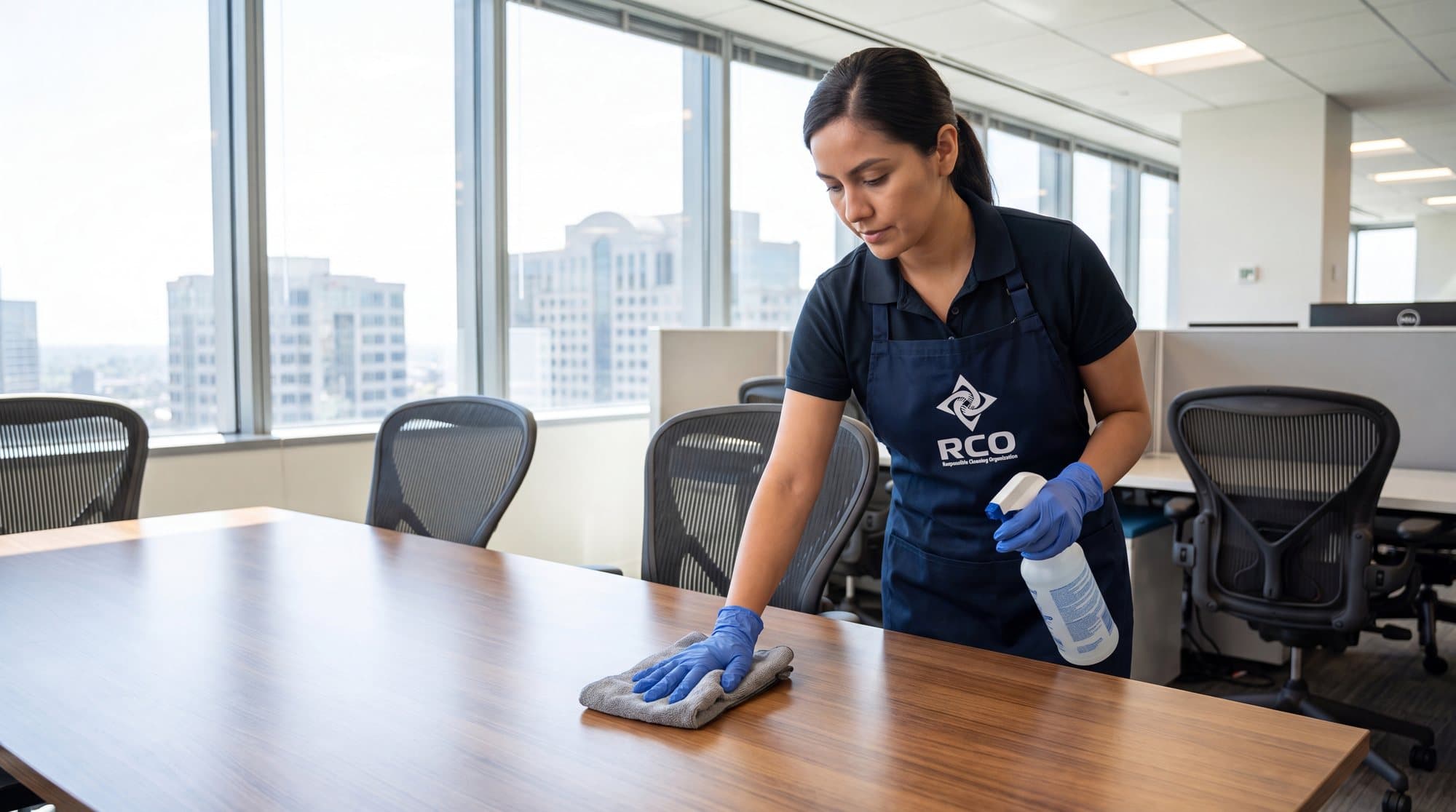

In short: An office cleaning checklist consists of three tiers. Each night trash is taken out, restrooms and break rooms are cleaned and restocked, high-touch surfaces are wiped down and floors are vacuumed or mopped. Each week dusting reaches higher and edges get detailed. Monthly or quarterly tasks include vents, baseboards, carpet extraction and hard floor maintenance. Let RCO Cleaning write your building's specific checklist into a cleaning system. Call us at (248) 849-0000.
Why does an office need a written cleaning checklist?
Most grievances against office cleaners don't involve big items. They focus on the little things that slowly stop getting done: wiping down the conference table, dusting above the partitions, deodorizing the microwave. A written checklist defines "clean the office" as tasks someone can be held accountable for, and gives you something to measure against.
And there's an absolute minimum built into the regulation as well. OSHA's sanitation standard requires that all places of employment be kept clean to the extent the nature of the work allows, and that waste be removed as often as necessary to keep the workplace sanitary. EPA's guide for office occupants drills down further on the trash: containers emptied daily, to prevent odors and biological contamination.
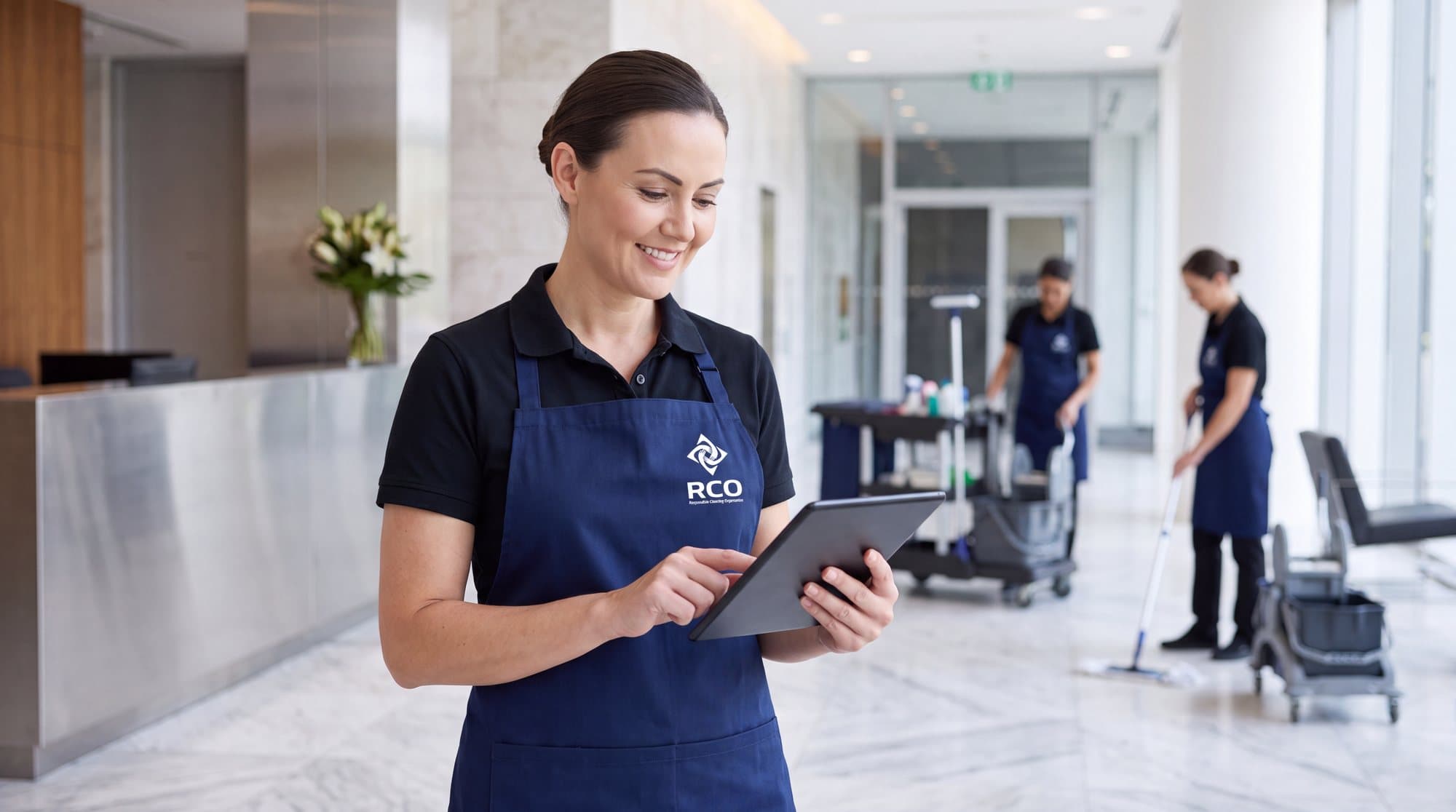
Nightly office cleaning checklist
The CDC tells offices and businesses to clean frequently touched surfaces routinely, and other surfaces when they're visibly dirty. Its list looks like a tour through an office: pens, counters, door knobs, railings, elevator panels, touchpads, restroom fixtures and desks.
Pay special attention to restroom cleaning. People judge the cleanliness of your entire facility by how clean the restrooms are. OSHA's sanitation standard calls for hand soap or other hand cleansing compound at lavatories as well as individual hand towels or a hand air blower, so restocking isn't optional. When cleaning a restroom at night, clean from top to bottom and clean to dirty. That means mirrors and dispensers first, then sinks and countertops, then partitions and toilets, then the floor. Spray disinfectant on fixtures and high-touch surfaces and allow it to remain wet for the contact time stated on the label; according to the CDC, the surface should remain wet for the entire contact time to make sure germs are killed.
Weekly office cleaning tasks
Dusting up high
Tops of partitions, shelves, frames and window sills: the ledges everybody skips until the day somebody looks.
Interior glass
Glass partitions and conference room walls, because it's not just the fingerprints you see when you walk in.
Edges and corners
Vacuumed around the walls and under desks instead of just the middle of the room.
Bins washed
Trash and recycling containers washed or wiped inside, so odors don't build up.
Meeting rooms
Chairs wiped, tables cleaned corner to corner, coffee rings erased.
Break room detail
Microwave interior, cabinet doors, refrigerator handles. EPA's office guide states refrigerators should be cleaned regularly to avoid odor buildup.
There are jobs that fall in the gray area between cleaning and building maintenance: changing light bulbs, refilling the coffee station, watering plants, reporting a dripping faucet. None of them is very difficult, but each one leads to frustration when nobody wrote down whose job it is. Declare each one in the scope or out of it, explicitly.
Monthly and quarterly office cleaning tasks
| Task | How often | Why |
|---|---|---|
| Vents, return grilles and high dusting | Monthly | Accumulated dust on grilles; EPA wants vents and grilles not obstructed |
| Baseboards, door frames and kick plates | Monthly | Scuffs and dust collect wherever vacuums and mops bump |
| Upholstered chairs vacuumed | Monthly | Crumbs and dust live in the seams |
| Hard floors scrubbed, and burnished or recoated | Monthly to quarterly, by traffic | Restores the finish before it wears through |
| Carpet deep cleaned | Entrances at least quarterly, the rest twice a year | Entryway and occasional deep cleaning: the Carpet and Rug Institute's recommendation |
| Restroom tile and grout | Quarterly | Grout holds on to what a mop leaves behind |
| Exterior windows | Quarterly or seasonally | Weather and street grime build up on the glass |
Don't underestimate the vacuum. CRI ranks regular, effective vacuuming as the most important step in keeping your carpet clean, stating that regular vacuuming can remove 90 to 95 percent of dry soil. Deep cleans are most effective on carpet that has been well maintained with frequent vacuuming.
Spots don't follow the calendar. CRI recommends spots and spills be cleaned up immediately, minimizing chances for permanent staining. So coffee stains on the carpet will be addressed that night, instead of during the next quarterly cleaning.
Mistakes that make a clean office look dirty
Easy to miss, and easy to notice
- Wiping around the light switch instead of the switch itself
- Mopping the center of the restroom floor and skipping behind toilets and underneath stalls
- Vacuuming the open middle of a room and never the edges
- Leaving the entrance mat in place for months, with grit and water under it
- Spraying cleaner straight onto keyboards and phones instead of onto the cloth
- Using the same cloth in the restroom and the break room
Good crews also tell you what they see. EPA's office guide requests that any water spills be cleaned up immediately and leaks reported as they happen. If a leak turns into real water damage, that's a job for our sister company, RMO Mitigation & Restoration, at (248) 845-0000.
How do you use the checklist with your cleaning company?
Walk the building together
List every room type, and agree what clean means in each one.
Put it in the scope
Nightly, weekly, monthly and quarterly tasks, written down room by room.
Agree how it's checked
Who inspects, how often, and how problems get reported and fixed.
Review after 30 days
Frequency should be determined by the use of the building; our article on how often an office should be cleaned can help.
Office cleaning checklist questions
How often should office restrooms be cleaned?
Most offices: nightly, with restocking each evening. Larger buildings with heavy traffic often have a day porter to check and restock during business hours.
Should the cleaning crew clean desks?
Clear desks? Yes, wiped down every night. If your desk is covered in papers, it will usually be left alone. That's what most people want anyway.
Will the crew clean out the refrigerator?
Only if it states that in the scope. Offices often schedule a weekly or monthly fridge clear-out with notice to employees, as the crew cannot decide whose lunch is whose.
What's the difference between routine cleaning and deep cleaning?
Routine cleaning maintains a clean building. Cleaning it deeply resets it: carpet extraction, floor scrubbing and refinishing, high dusting, grout cleaning and vent cleaning.
Who should I hire to clean our office every night?
Contract a company that writes your nightly, weekly and monthly tasks into the scope and tells you who checks them off. RCO Cleaning provides office cleaning services throughout Oakland County, Wayne County and Macomb County. We offer a free walkthrough and will have a quote to you within 24 hours. Call (248) 849-0000.
How RCO Cleaning turns the checklist into a cleaning system
Our checklist at RCO begins with a complimentary walkthrough of your building, and you receive your quote within 24 hours. After your approval, we create a cleaning system customized for that building. During the first week we provide a complimentary deep clean so your nightly crew is keeping a clean building clean instead of catching up, and our managers inspect their work against that system.
Sources
Next guide
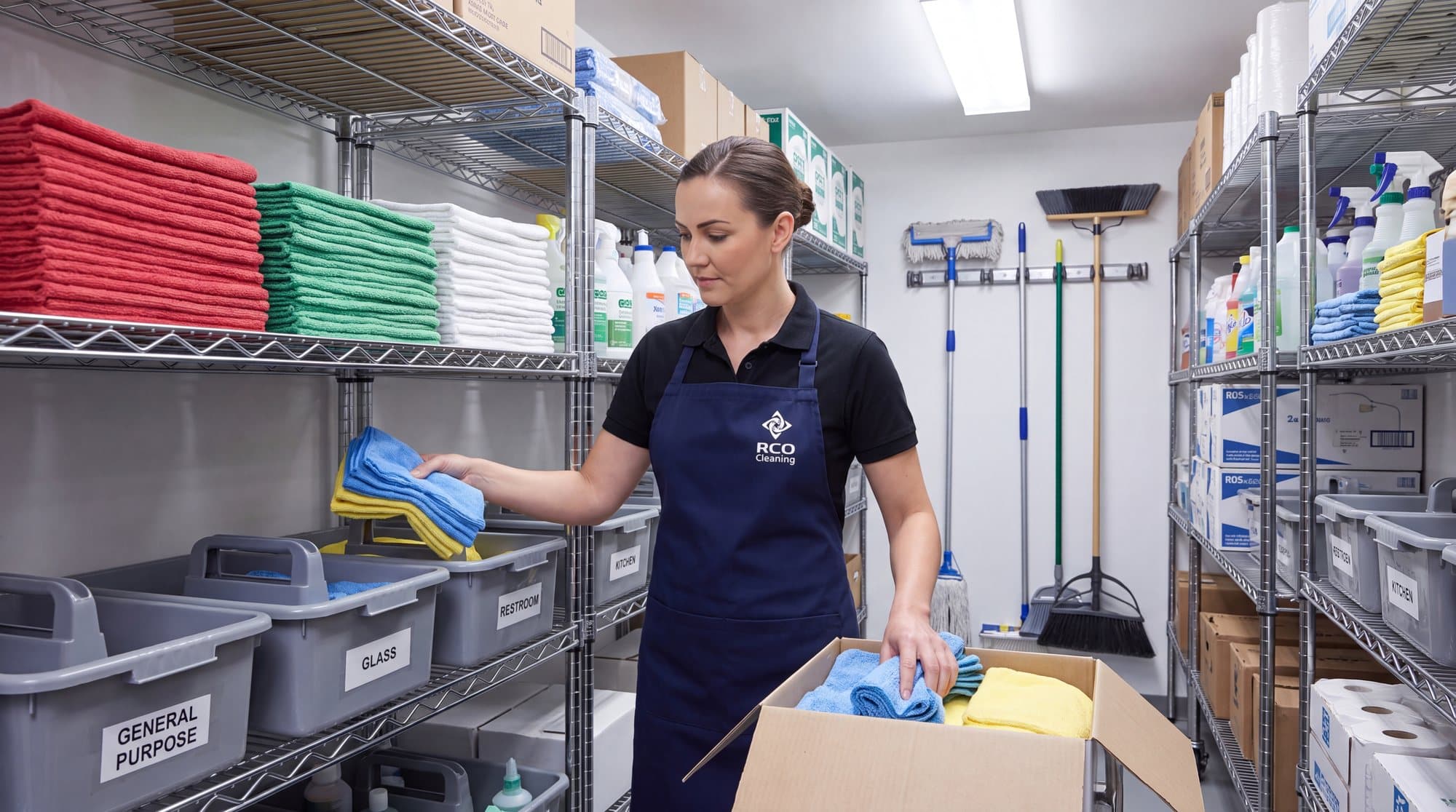
Many arguments between cleaners and clients over commercial cleaning supplies begin with a roll of paper towels. RCO Cleaning explains what your cleaning contract should say about supplies, and the chemical paperwork required by law.