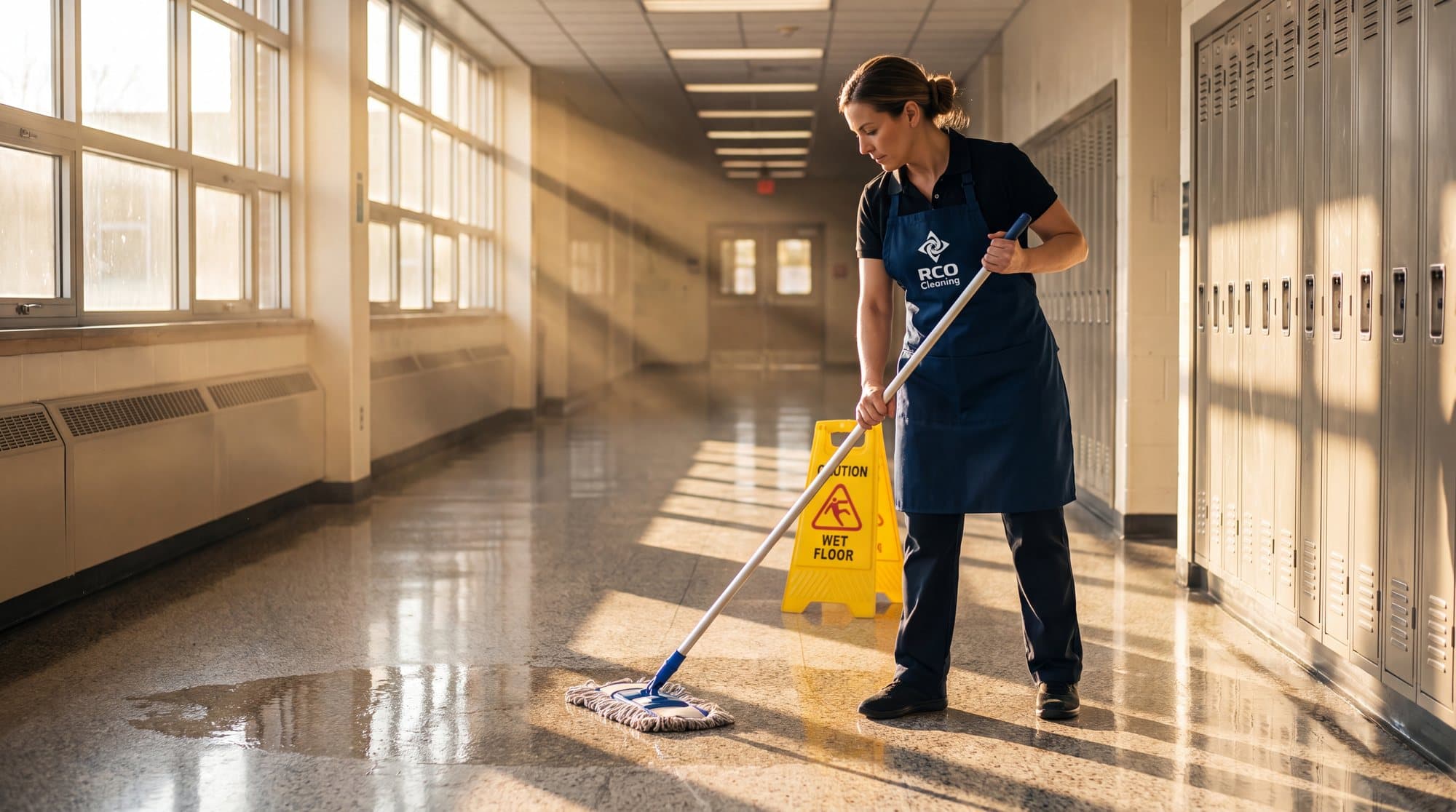

In short: To disinfect your school, clean the areas first. Then disinfect frequently touched surfaces with an EPA-registered disinfectant, used exactly as directed on the label. This means leaving the surface wet for the full contact time. According to the CDC's school guidance, what matters most is routine daily cleaning and sanitizing of the surfaces students touch most. There is no need to fog the building or wipe down walls. RCO Cleaning services schools in Metro Detroit on the school's calendar: (248) 849-0000.
Cleaning vs sanitizing vs disinfecting
| What it does | How | |
|---|---|---|
| Cleaning | Removes germs, dirt and impurities. May not necessarily kill germs, but will reduce their numbers. | Soap or detergent and water |
| Sanitizing | Reduces the number of germs on surfaces to a level that is considered safe by public health standards or requirements. | Cleaning or an EPA-registered sanitizer. EPA notes that sanitizers are for bacteria and not viruses. |
| Disinfecting | Kills germs on surfaces | An EPA-registered disinfectant, after cleaning, used as its label directs |
Order is important. According to the CDC, disinfecting doesn't necessarily clean dirty surfaces. EPA's six steps for using disinfectants include pre-cleaning with soap and water if the product label calls for it or if the surface is visibly dirty. It's clean first, disinfect second.
One additional difference: EPA only regulates a cleaning product if it sanitizes or disinfects. Many products are registered as both a sanitizer and disinfectant. CDC notes that the label may include a separate procedure for each claim, so read which one you are using before you begin.
Which surfaces in a school matter most?
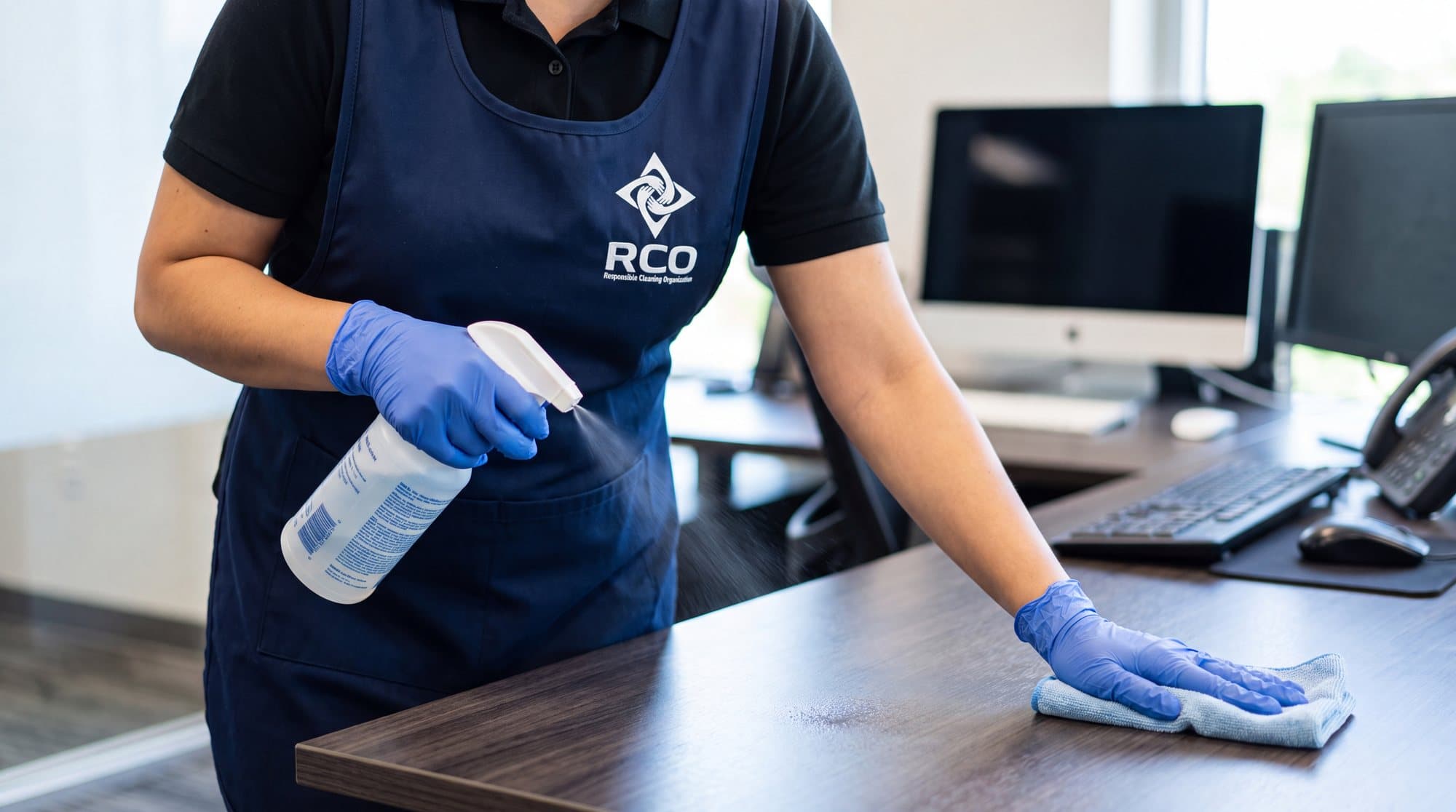
According to the CDC school guide, your basic protocol is to follow your school's standard procedures, which typically means sanitizing the most commonly touched surfaces and objects daily. Some schools also require disinfecting those items daily, and typical protocols often include disinfecting specific areas like bathrooms.
Desks and countertops
Classroom desks, lunch tables, lab tables, and the sink area countertops.
Doorknobs and handles
Classroom doors, restroom doors, push bars and cabinet pulls.
Keyboards and phones
Shared computers and telephones. The CDC recommends disinfecting wipes for electronics that won't be damaged by liquids.
Faucet handles
Restroom and classroom sinks, and water fountain buttons.
Hands-on learning items
Manipulatives, shared supplies, and toys in the early grades.
Bathrooms
Areas that standard procedures often single out for disinfection.
How to use a disinfectant in a school so it works
Check that it's EPA-registered
Look for the EPA registration number on the product label. The CDC's guide to flu prevention recommends reading the label to make sure the product is registered as effective against the germ you want to kill, like influenza A.
Read the directions
EPA requests that you check the use sites and surface types and read the precautionary statements prior to initial use.
Pre-clean
Clean the surface with soap or detergent and water if it's visibly dirty or if the manufacturer's directions specify to do so.
Respect the contact time
Directions will indicate a contact time and the surface should remain wet for that entire time. As far as wipes go, CDC mentions that you may need to use more than one wipe to ensure you can keep a surface wet long enough.
Protect people
Wear gloves, and wash your hands after. Never mix cleaning products and disinfectants unless the label says it's safe: The CDC has cautioned that mixing products like chlorine bleach and ammonia cleaners can result in serious injury or death.
Lock it up
Lids closed tight, and stored out of reach of children.
CDC also recommends that schools ensure custodial workers, teachers and anyone else who will be using cleaners and disinfectants read and understand the labels of these products, which might require providing training materials in other languages.
What does the CDC say you don't need?
Not necessary, according to CDC's school flu guidance
- Closing the school so that all surfaces in the school can be cleaned or disinfected
- Additional cleaning and disinfection simply because the school was dismissed due to high absenteeism
- Wiping down walls and ceilings
- Frequently using room air deodorizers
- Fumigating
CDC explains: Flu viruses are relatively fragile. Most studies suggest flu viruses can survive and possibly infect someone for only 2 to 8 hours after landing on a surface. After that, they typically die or are no longer able to cause infection. Regular cleaning followed by disinfecting should be sufficient to remove or kill the flu virus. Additionally, those specialized cleanup processes can irritate eyes, noses, throats and skin. They can also aggravate asthma.
When a school needs more than routine disinfection
Body fluids are where the routine ends. According to the CDC, surfaces that are visibly soiled with blood or other body fluids should be cleaned right away. Gloves and other protective equipment should be worn as needed: soak up the spill or wipe it up, clean the surface, and then disinfect it. Rarely, a school may need to do special or enhanced cleaning for a specific illness. If this is the case, the CDC recommends contacting the state or local health department for advice.
Cleaning is just one piece of the puzzle. CDC's everyday guidance for schools adds healthier air as well, by improving ventilation with open windows, fans and portable air cleaners, and handwashing with soap and water, with hand sanitizer of at least 60 percent alcohol if soap and water are not available.
A nightly school cleaning checklist
Decide who cleans what during the day. Some schools have teachers wiping down desks between activities and a daytime custodian responsible for checking bathrooms after lunch. The evening cleaning staff cleans the entire building. Break that down on paper, including what products each individual can use so that no steps are missed by everybody assuming somebody else did it.
Before the first bell: the summer deep clean
Summer is when schools schedule what can't be done during the school year: carpet extraction in classrooms and offices, hard floors that are stripped and refinished, restroom tile and grout scrubbed, lockers and cubbies deep-cleaned, vents and light fixtures dusted, windows washed inside and out. Schedule it based on the school calendar and execute it in the proper sequence. Floors that are refinished need time to cure before furniture is returned to them, so floors come first and furniture gets replaced last. The final wipe-down of desks and high-touch surfaces occurs the week before students return.
School disinfection questions
Is sanitizing the same as disinfecting?
No. According to the EPA, sanitizing kills bacteria on surfaces while disinfecting kills viruses and bacteria. Many products are registered as both sanitizers and disinfectants, so be sure to read which directions you are following.
Do we need to fog the building during flu season?
The CDC's school guidance says no. Routine cleaning and disinfection is appropriate for flu, and additional measures such as fumigation are not necessary or recommended.
How often should school restrooms be cleaned?
Daily, with disinfection as the school's procedures require. The CDC notes that standard procedures often include disinfecting restrooms. Restrooms that are heavily used during the day should also be checked and restocked.
Does a daycare follow the same guidance?
No, not necessarily. According to the CDC, its general disinfection guidance for facilities does not apply to early care and education programs and childcare facilities, which may have their own regulations or established practices for cleaning and disinfection.
Who should disinfect our school at night?
A trained night crew using your school's written procedures and products you've approved, with the daytime cleaning broken down in writing. RCO Cleaning cleans and disinfects schools, daycares, and colleges throughout Oakland, Wayne, and Macomb counties according to your school's calendar, starting with a free walkthrough: (248) 849-0000.
How RCO Cleaning cleans Metro Detroit schools
RCO cleans schools, daycares and colleges throughout Metro Detroit according to the school's schedule: nights, weekends and right before school starts. We begin with a free walkthrough to understand your building and your procedures. Then we design a cleaning system around them. Our managers routinely confirm it's being followed. The first deep cleaning is complimentary. Plus the weeks leading up to a new school year are the ideal time to schedule it.
Sources
- CDC: How to clean and disinfect schools to help slow the spread of flu (PDF)
- CDC: Everyday actions for schools to prevent and control the spread of transmissible infections
- CDC: When and how to clean and disinfect a facility
- EPA: 6 steps for safe and effective disinfectant use (PDF)
- EPA: What's the difference between products that disinfect, sanitize and clean surfaces?
Next guide
How to choose a commercial cleaning company: eight things to ask before signing your cleaning contract. Most problematic cleaning contracts were established incorrectly. Learn what good answers should sound like, and how RCO Cleaning answers all eight.