
In short: Commercial cleaning equipment handles tasks beyond the reach of a mop and a vacuum. Auto scrubbers clean and dry hard floors in a single pass, burnishers restore shine, extractors rinse soils from carpets, HEPA vacuums trap fine dust, water-fed poles wash high glass from the ground and pressure washers scrub walks and sidewalks. Let your floors, glass and traffic patterns decide what you need. RCO Cleaning has invested in its own fleet of heavy-duty equipment: (248) 849-0000.
Most of the difference between a building that looks maintained and one that looks mopped comes down to just a few well-used, well-understood machines.
Hard floors: scrubbers, burnishers and buffers
Auto scrubbers
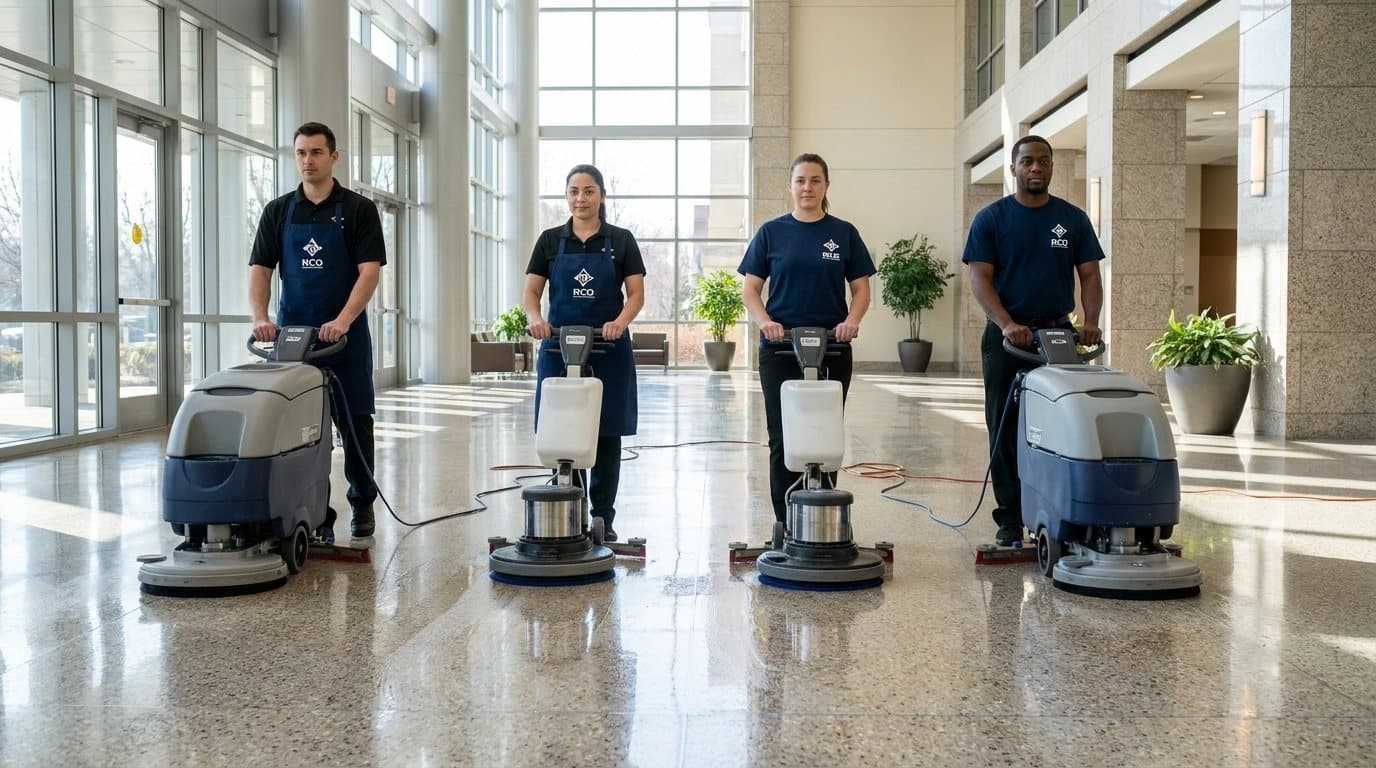
An automatic scrubber deposits cleaning solution, agitates with a brush or pad and vacuums up the dirty water through a squeegee, in a single pass. Floors are cleaned and left almost dry. That's important if you've got a lobby that people are walking through all day long: a mop just spreads dirty water around and leaves the floor wet as you work. Walk-behind scrubbers work well in lobbies, corridors, restrooms and store floors. Ride-on machines are great for warehouses, plants and parking decks.
Scrubbers are also ideal for sealed concrete in a warehouse or the salt film that coats Michigan entrances each winter.
Burnishers
A burnisher is a fast-spinning floor machine used to polish a finished floor (VCT for example) to restore some shine between deeper scrub-and-recoat cycles. A burnisher does not clean a dirty floor; it polishes a clean floor. If you burnish a floor that hasn't been dust mopped beforehand, you are just polishing the grit into the finish.
Floor buffers
The slower, more versatile relative. With a pad or brush attachment, a buffer can scrub, strip old finish, spray buff, or work grout lines in a bathroom. Basically, it's the workhorse of stripping and refinishing.
Carpet: what do vacuums and extractors do?
Vacuuming is by far the single most important thing you can do to maintain commercial carpet. According to the Carpet and Rug Institute, proper and frequent vacuuming is the single most effective method for keeping carpet clean. They say a routine vacuuming schedule removes 90 to 95 percent of dry soil from your carpet. Commercial uprights and backpack vacuums make short work of the job thanks to wider cleaning paths and easy reach for stairs and other tight spaces.
Filtration determines what happens to dust after it is collected. A vacuum equipped with a HEPA filter traps fine dust inside the vacuum instead of releasing it back into the air of the room. According to the EPA, a HEPA filter can theoretically remove at least 99.97 percent of particles measuring 0.3 microns, the most penetrating particle size, and collects larger and smaller particles with even greater efficiency.
Extractors are used for deep cleaning. They inject a cleaning solution into your carpet and then vacuum it back up, along with the soil, using strong vacuum power. The IICRC's ANSI/IICRC S100 is the standard used to specify proper procedures, methods and systems used by professionals when cleaning textile floor coverings. This includes everything from the cleaning chemistry and equipment to spot and stain removal. The Carpet and Rug Institute recommends having your carpet deep cleaned twice a year and your entryways at least every three months.
Windows: water-fed poles and pure water
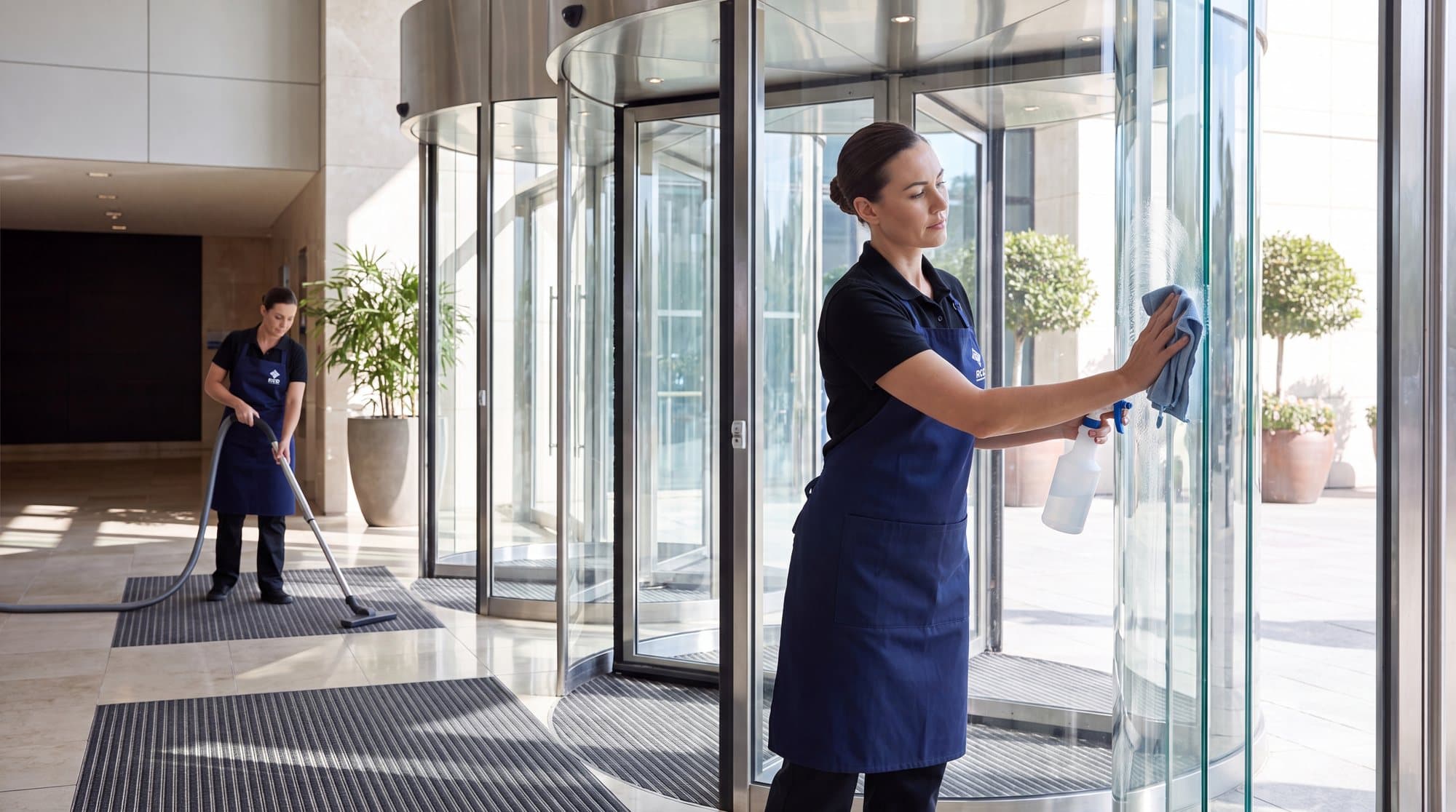
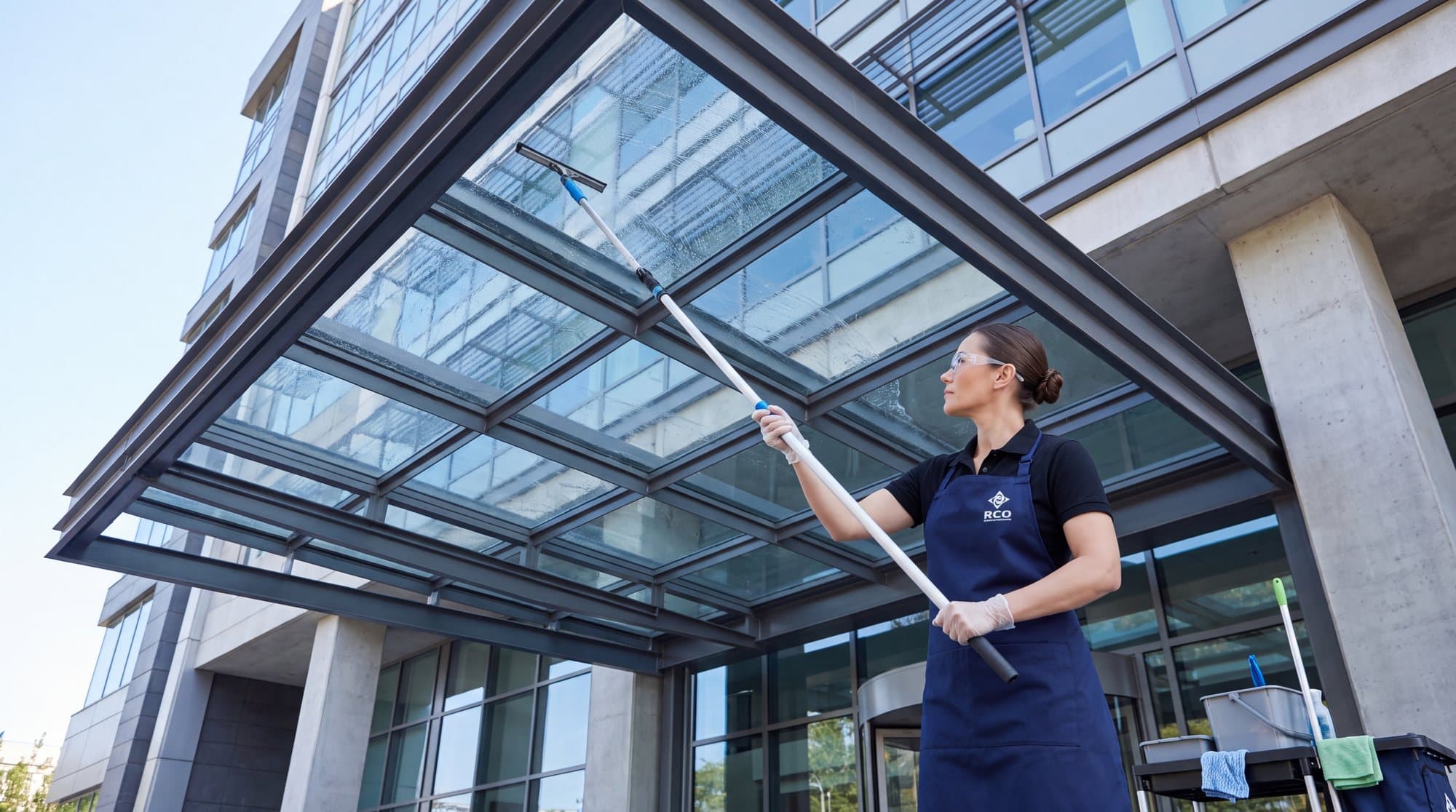
A water-fed pole consists of a long lightweight pole with a brush attached to the end, fed by a hose. Operators stand on the ground, brush the glass clean and rinse it with a stream of purified water, reaching upper floor windows, canopies and signage from the sidewalk.
Pure water is what leaves glass without spots. Tap water has minerals dissolved in it. If a drop of water dries on a glass surface, the water evaporates and the minerals remain as a spot. Pure water systems remove the minerals first. Window cleaning equipment manufacturer Unger explains that deionization filters contain resin that attracts and filters out ionized salts and impurities, creating deionized pure water. Reverse osmosis units remove up to 98 percent of dissolved minerals and contaminants before passing it through a final deionizing stage. With no minerals dissolved in the rinse water, there will be nothing to leave behind as a spot.
Dries clean
Rinsing with purified water results in no spots from minerals. Glass is ready when the rinse water evaporates.
Less chemistry
Unger notes that with pure water, surfaces can be cleaned chemically-free.
Reach from the ground
Upper story windows, canopies and signs can be cleaned from the sidewalk, in many buildings without a lift.
Frames too
The brush cleans frames and sills as well as glass, and the rinse washes away the dirt.
Outside: pressure washers
Pressure washers clean sidewalks, entrances, dumpster pads, loading docks, parking decks and walls. Hot-water units take care of grease and gum. What most people overlook is the wash water afterward.
Michigan's Department of Environment, Great Lakes, and Energy (EGLE) highlights that power washing runoff can contain oil, grease, detergents, solvents, metals and other pollutants, and states that drains outdoors and in parking lots often lead to storm sewers that empty directly to a body of water. Offered to power washing operators and customers who hire them, its recommendations detail four possible solutions: approval to send the water to a treatment plant through sanitary or combined sewers, collection and transport to one, a groundwater discharge authorization or a surface water permit. If you can't verify where a drain goes, EGLE advises, don't discharge there.
When you hire pressure washing, don't let anyone
- Wash into a storm drain without a plan for the water
- Allow wash water to puddle and dry in the parking lot, which EGLE lists as a frequent infraction
- Guess where a drain goes instead of checking
- Aim high pressure at door seals, window gaskets or vents
Which machines does your building need?
| Your building has | The machine | How often it typically runs |
|---|---|---|
| Vinyl tile lobbies and corridors | Auto scrubber and burnisher | Scrubbing nightly or weekly; burnishing on a schedule set by traffic |
| Carpeted offices | Commercial vacuums with good filtration, and an extractor | Vacuum traffic lanes nightly, extract twice a year, entrances at least quarterly. |
| Sealed concrete in a warehouse or plant | Walk-behind or ride-on auto scrubber | On a schedule matched to traffic and soil |
| Ceramic tile and grout | Floor machine with brushes | Quarterly in restrooms, more where grout darkens fast |
| Glass storefronts and upper windows | Water-fed pole with pure water | Monthly to quarterly, depending on exposure |
| Sidewalks, entrances and dumpster pads | Pressure washer, with a plan for the wash water | Seasonally, and after the winter salt |
Commercial cleaning equipment questions
Do I need to buy a floor scrubber for my building?
Typically not. The cleaning company should provide whatever equipment is necessary for the job. During the walkthrough, inquire what machines will be used and how often.
Why does my glass have spots after it's cleaned?
Most of the time it's minerals in tap water or detergent residue on the glass. When you rinse with purified water there's nothing left on the glass to dry into spots.
Is pressure washing bad for the environment?
It can be, if your wash water goes down a storm drain. EGLE explains the legal ways to handle it in Michigan.
Who can scrub a warehouse floor or wash high glass for our building?
A commercial cleaning company with its own floor scrubber and its own water-fed pole system, and a crew that has been trained to operate them. RCO Cleaning brings both to your building whether it is located in Oakland, Wayne or Macomb County. Plus your walkthrough is free. Call us at (248) 849-0000.
The equipment RCO Cleaning brings to Metro Detroit buildings
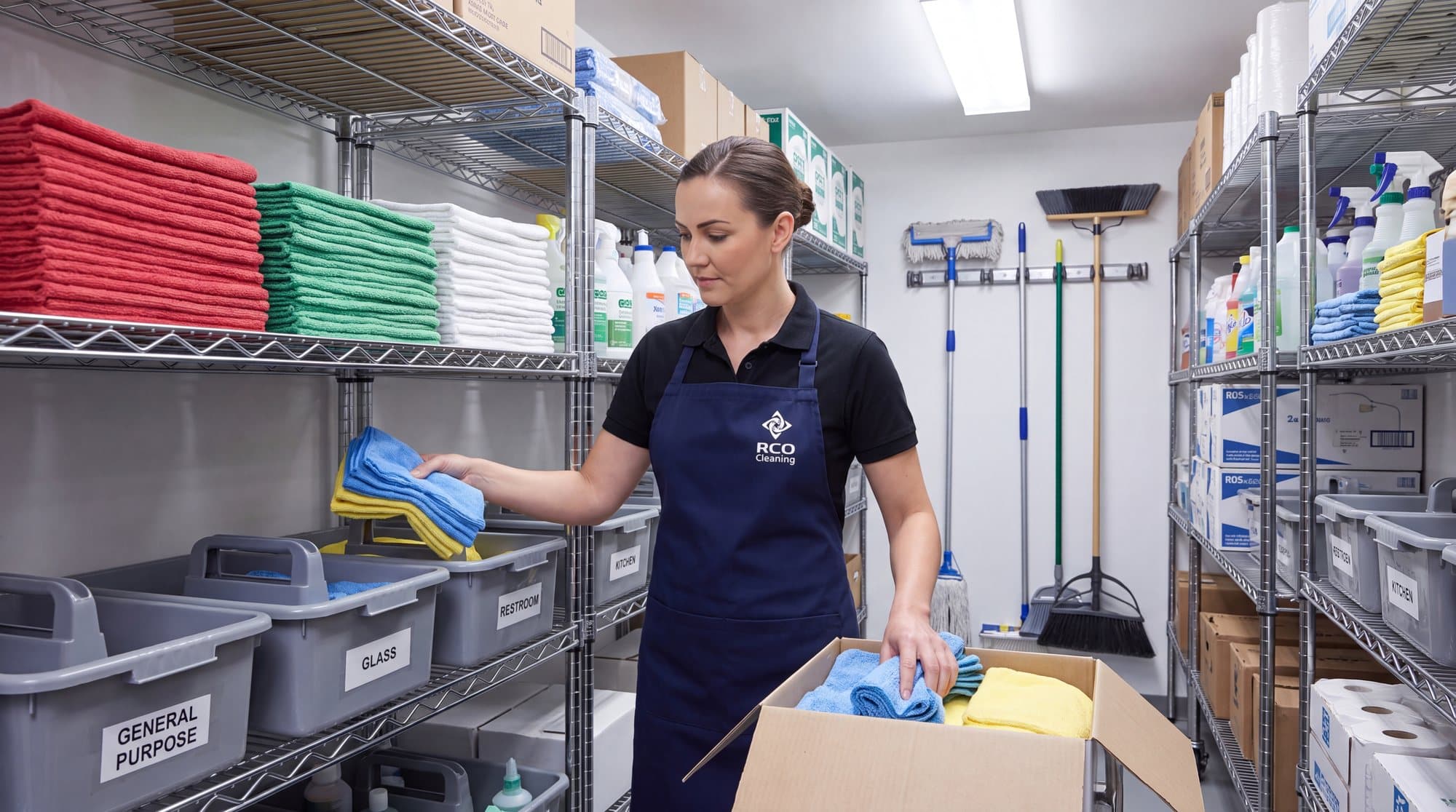
RCO has purchased its own commercial-grade equipment. We operate our own floor scrubber, floor buffers, high-powered vacuums, carpet extractors, pressure washers and water-fed window cleaning system that features a 7-step filtration process and a high-pressure pump so we can deliver spot-free glass. Newer equipment allows our crews to use fewer chemicals. Each employee is trained on all of the equipment and cleaning supplies before they enter your building. Learn more on our equipment and technology page.
Sources

Next guide
How to choose a commercial cleaning company: eight things to ask before signing your cleaning contract. Most problematic cleaning contracts were established incorrectly. Learn what good answers should sound like, and how RCO Cleaning answers all eight.